TRAVEL GUIDE · CHINA
Walking in Chinese cities: a practical guide for visitors
Choose one area, save the return route and leave room to stop—good city walks are shorter and more flexible than they look on a map.
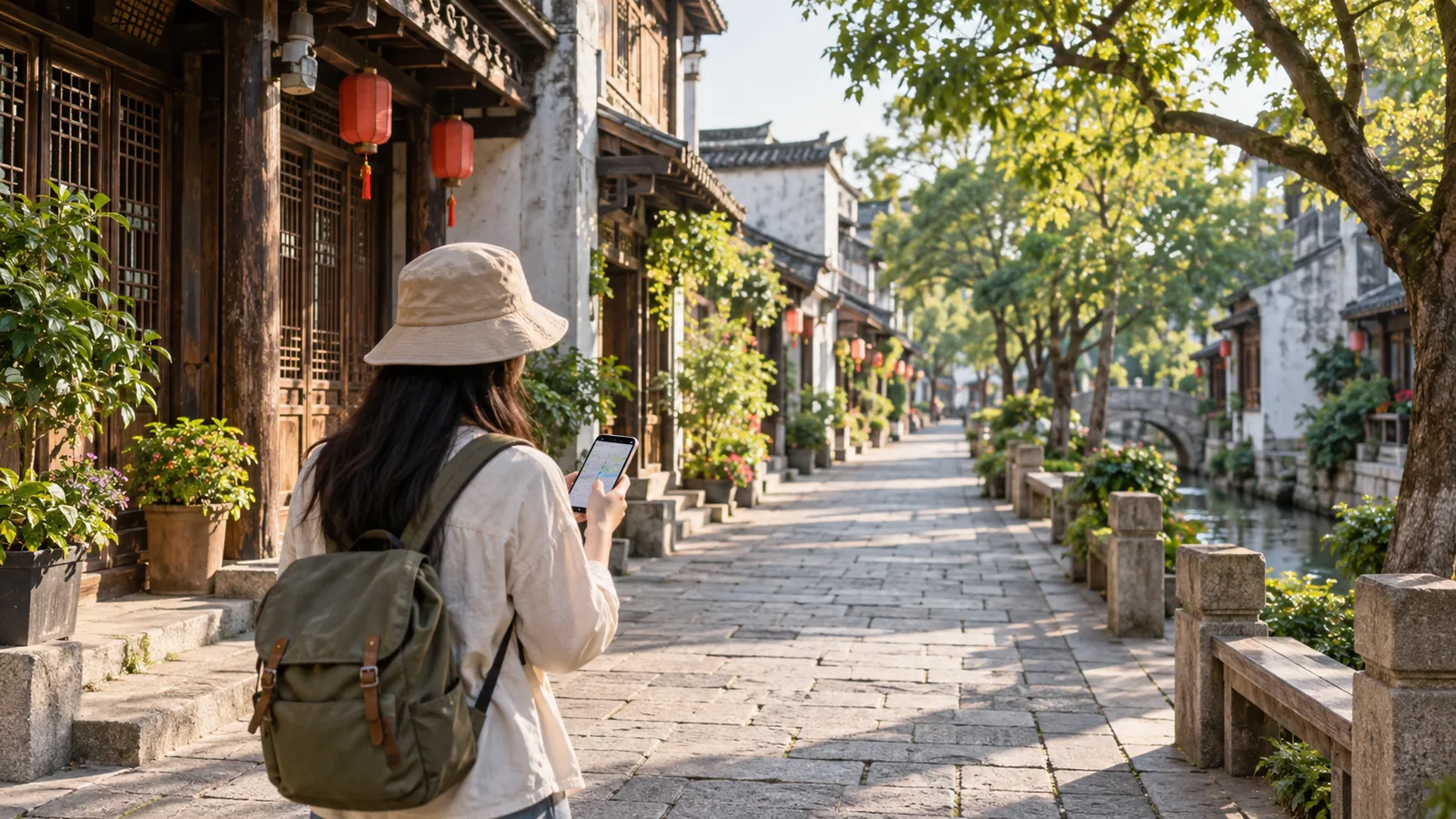
Walking is one of the best ways to notice a city, but a route that looks compact on a map can include large crossings, construction, stairs or a long distance from the nearest station. Build walks around one neighborhood, protect your phone and essentials, and keep an easy route back to transport or your hotel. Use current maps and local instructions for the place you are visiting.
01
Choose one neighborhood, not a city-wide line
Pick a district, a station and one main reason to walk there: a street, park, market or waterfront. Add only nearby stops. A focused route gives you time to notice the place and makes it easy to shorten the walk when weather, crowds or energy changes.
02
Save the start, finish and return route
Before leaving Wi-Fi, save the hotel address in Chinese, the destination, the nearest useful station and a simple return option. Keep enough battery for maps and payment. If your route becomes unclear, stop somewhere safe and public to check it rather than walking farther just to keep moving.
03
Make crossings and traffic part of the plan
Use marked crossings and follow local signals even when the road looks quiet. Bikes, scooters, cars and delivery traffic can share busy streets. Keep your attention up instead of navigating only through a phone screen, and avoid stepping into a cycle lane or roadway for a photograph.
04
Dress for the actual street, not just the photo
Wear shoes suitable for uneven paving, stairs and a longer-than-expected route. Carry water and use shade, layers or rain protection based on the day’s forecast. A pleasant walk can become uncomfortable quickly when the weather changes, so make a café, station or hotel a normal stopping option.
05
Keep belongings simple and close
Carry a small day bag and keep passport, payment method, phone and room key in secure, accessible places. Do not leave a bag on a bench or table while taking pictures. If you shop or buy snacks, make sure the extra items do not prevent you from moving comfortably or finding your essentials.
06
Let the route end before you are exhausted
Set a natural finish point such as a metro station, café, attraction or hotel—not an arbitrary number of kilometers. Leave time for the next meal, reservation or transport. The goal of a city walk is to see more by moving slowly, not to turn the day into a navigation test.
The best city walk has one clear area, a saved way back and enough flexibility to stop when the city gives you a reason.