TRAVEL GUIDE · CHINA
Traveling in China with children: a practical guide for families
Keep travel days shorter, make the next step visible and build a small backup plan around food, rest and transport.
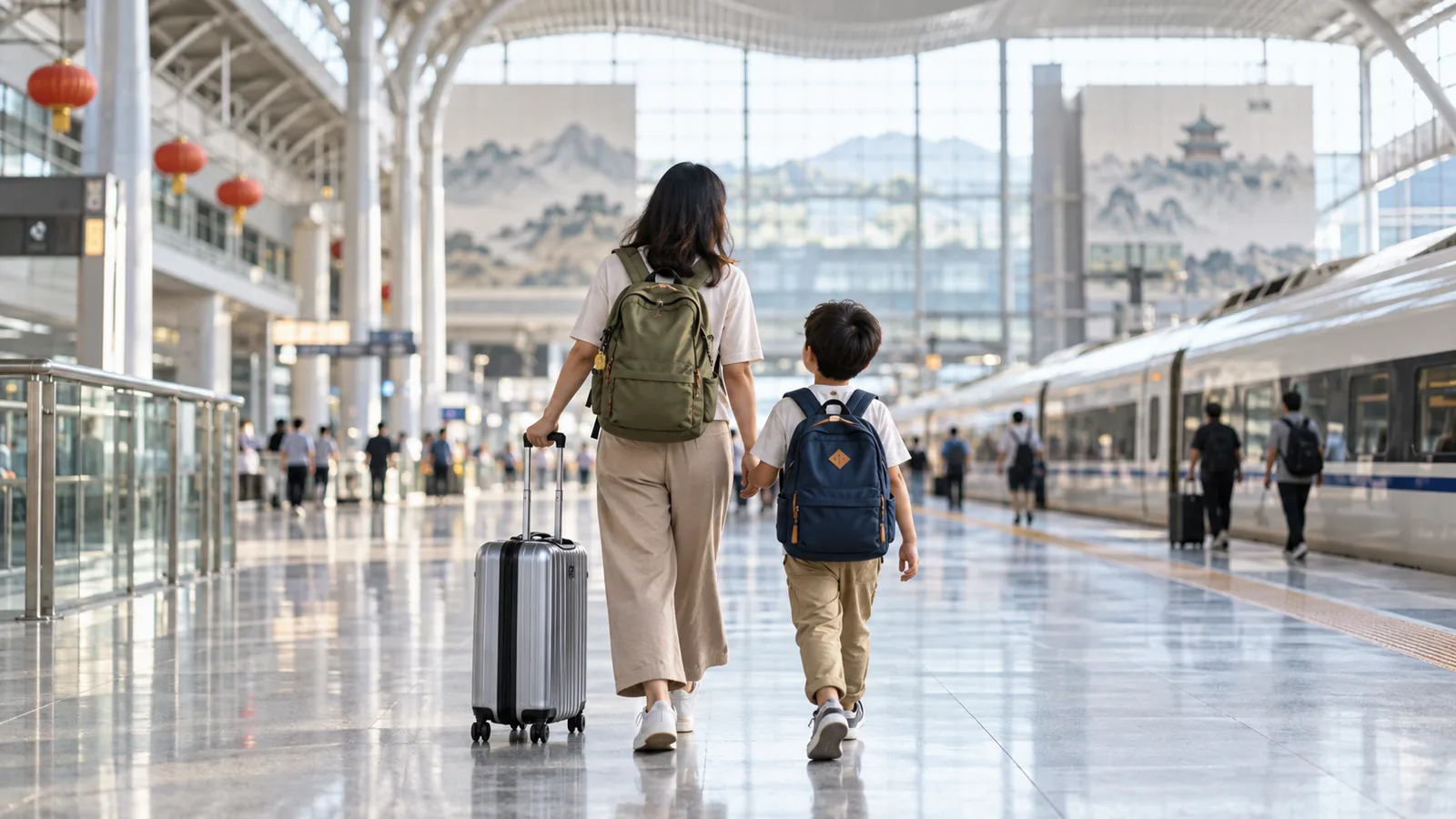
A family trip in China does not need a special itinerary for every hour. It needs a rhythm that children can follow: a clear place to sleep, a realistic travel day, food and water within reach, and one adult who knows the next address. Cities, stations and attractions can be busy and large, so the best preparation reduces avoidable decisions when everyone is tired.
01
Plan one anchor activity each day
Choose one meaningful visit, meal or journey as the day’s anchor, then leave the rest flexible. A museum reservation or train departure is enough structure; do not add another distant attraction just because the map makes it look nearby. Build time for toilets, snacks, a slower walk and an early return. Children usually remember the enjoyable parts of a day, not how many stops it contained.
02
Save every address in Chinese
Keep the hotel name, station, attraction and next restaurant in Chinese as well as English. Save them as screenshots and map pins before leaving Wi-Fi. This makes a taxi, ride-hailing pickup or request for help much easier when a child is tired. At check-in, take a photo of the hotel card or ask reception to write the address clearly.
03
Make transport days deliberately simple
For rail or air travel, arrive with more time than a solo traveler would need. Keep passports, tickets, water, wipes, a light layer and a small distraction kit in one day bag. Tell children the next three steps in simple language: security, waiting area, then train or plane. On a long journey, choose seats and connection times for comfort rather than the tightest schedule.
04
Build a food and water fallback
Restaurants and food courts can be plentiful, but familiar food is not always immediately available at the right time. Carry water and a few non-messy snacks that suit your family, while checking any medical or dietary needs carefully. At a restaurant, use photos, translation tools and simple requests instead of trying to solve every menu item. A calm, basic meal is often the better travel choice.
05
Choose accommodation for the first and last hour
When comparing hotels, look beyond room photos. Check the exact location, the walk from the closest station or pickup point, the bedding arrangement and whether the area gives you an easy dinner or convenience-store option. A slightly less central hotel can be right if it makes arrival, bedtime and an early departure less stressful. Confirm child policies and documents directly with the property before booking.
06
Use a meeting plan, not just a phone
Give older children a small card or note with the hotel name, a parent’s contact details and the day’s destination. Agree on one meeting rule: stop where you are and ask a uniformed employee, station worker or venue staff member for help. Phones and trackers can be useful, but they are not a substitute for a simple shared plan in a crowded station or attraction.
07
Keep the health and safety plan practical
Bring the medicines and comfort items your family routinely needs in original packaging where possible, and carry a short written note about allergies or important conditions. Travel insurance, emergency contacts and the address of your next hotel should be accessible offline. For a non-urgent concern, your hotel can often help you locate appropriate local services; for an emergency, seek official emergency help immediately. This article is travel preparation, not medical advice.
The family-friendly China itinerary is the one with a clear next step, enough pauses and a backup for the moment plans become tiring.