TRAVEL GUIDE · CHINA
Long-distance buses in China: a practical guide for visitors
Confirm the real arrival point, plan the terminal and keep the items you need out of the luggage hold.
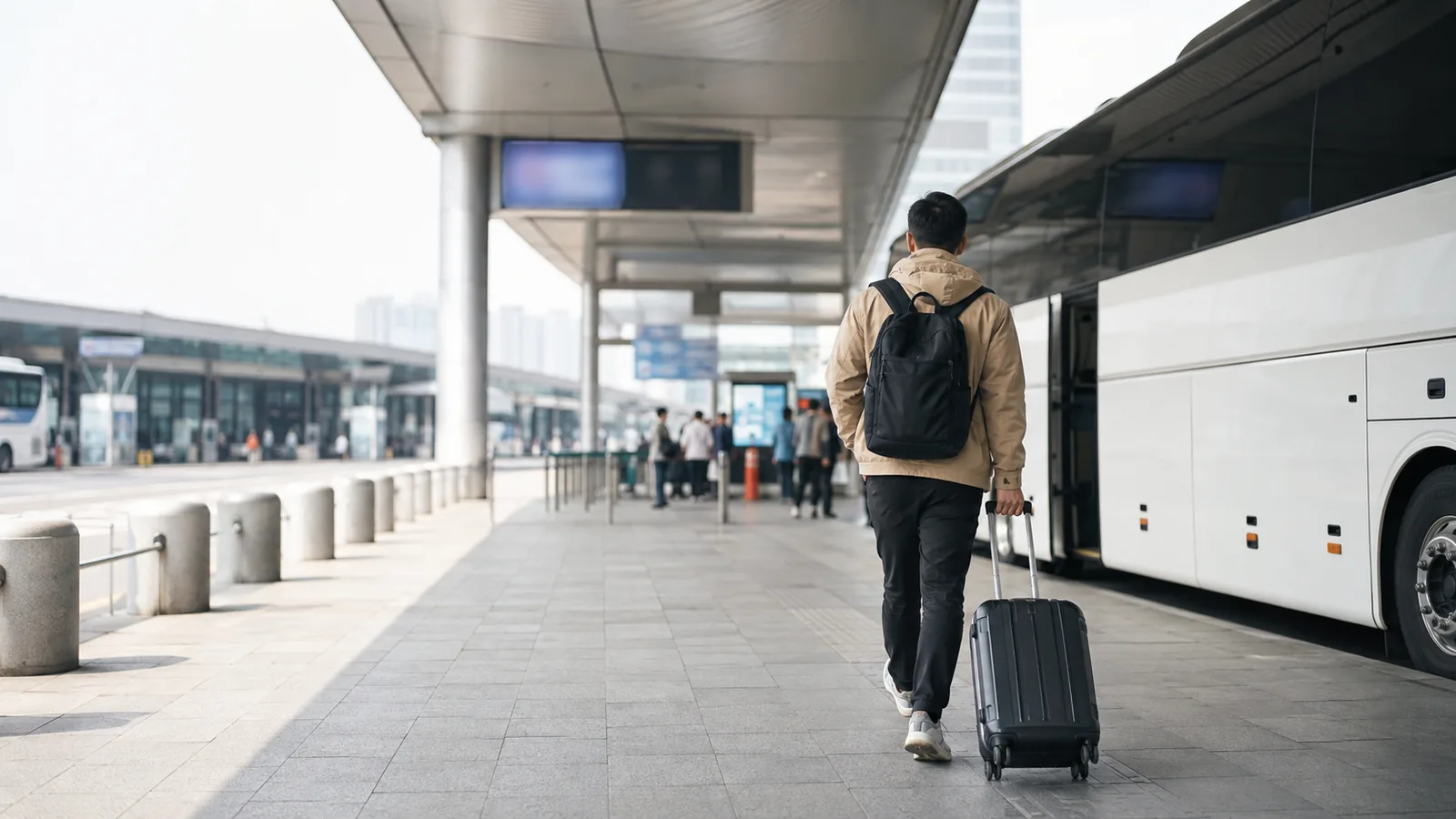
High-speed rail and domestic flights are often quick, but an intercity coach can connect smaller cities, towns and attractions that sit beyond the rail network. The key is to plan the whole movement, not just reserve a seat.
01
Check the actual arrival point
A city name alone may not tell you where a bus stops. Save the Chinese names of the departure terminal and the arrival terminal or stop, then find both on a map. A city can have several terminals, and the arrival point may be far from your hotel or next plan.
02
Read more than the departure time
When comparing options, look at the departure and arrival terminals, expected journey time, luggage rules and change or cancellation conditions as well as the seat. Road conditions and intermediate stops can affect the day, so avoid a tightly timed connection to an important booking or flight.
03
Arrive at the terminal with time to spare
Entrances, security checks, waiting halls and boarding areas can be separate. Arriving early gives you time for water, a restroom and a calm search for the right gate. Save the Chinese destination name and booking details as screenshots; if information changes, show the ticket to staff and ask.
04
Separate essentials from hold luggage
Large bags may travel in the compartment below the coach, where they are not easy to reach. Keep your passport, phone, charger, power bank, medication, water, a light layer and next accommodation address in a small bag at your seat. Label larger luggage and check it as soon as you get off.
05
Prepare for the road, not a train cabin
Temperature, lighting, rest stops and road movement are outside your control. Bring water, a small snack, headphones and a light layer, plus any personal motion-sickness preparation you normally use. During a rest stop, remember the bus number or where it is parked before walking away.
06
Plan the first move after arrival
A small terminal or an attraction-side stop may not have the transport you expect outside. Before you arrive, open the Chinese hotel address and map pin, decide how you will continue and keep a backup. For late arrivals, let your hotel know the expected time and check your data and payment setup beforehand.
07
Use coaches for the right part of the journey
A bus is often most useful as the final connection beyond rail or flight routes, rather than as a race against them. Start with the two real endpoints and total travel time, then keep the first or last day of your trip flexible enough for the road journey.
A comfortable coach trip starts before boarding: save the real arrival point, reach the terminal early, keep essentials with you and know how you will continue after you step off.