TRAVEL GUIDE · CHINA
China power plugs and charging: a guide for foreign visitors
Check voltage before you pack, bring the right adaptor and avoid turning a simple charge into damaged equipment.
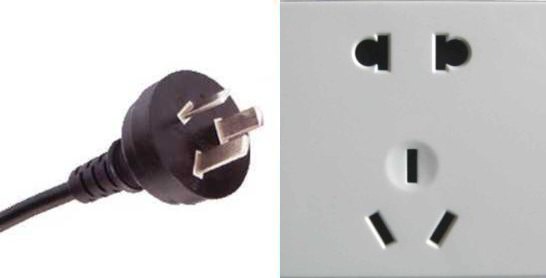
Mainland China uses 220V at 50Hz. Plug shapes and voltage compatibility are separate questions: a plug that fits does not prove a device is safe to use.
01
Read the label, not the plug
Look for an input label such as ‘100–240V, 50/60Hz’. Most modern phone, tablet and laptop chargers with that range need only a plug adaptor. A 110V-only hair dryer, straightener or small appliance may need a voltage converter or a locally rated alternative.
02
Expect several socket shapes
Official aviation guidance says China uses 220V/50Hz and that various plug types appear, including two-pin and grounded three-pin sockets. Bring a quality universal adaptor instead of assuming every hotel outlet will match your home plug. Check that the adaptor is suitable for the device’s power draw.
03
Pack a practical charging kit
A universal adaptor, the right USB-C or USB-A cables and a compact multi-port charger are usually more useful than several single-purpose adaptors. For a high-power device, use equipment rated for its load; an adaptor changes plug shape but is not automatically a voltage converter.
04
Use hotel outlets carefully
Do not force a loose plug into a socket or use damaged equipment. Stop using an adaptor if it becomes unusually hot, sparks or has a poor connection. Keep essential devices charged before a long train ride or flight, and carry a power bank within airline rules.
05
Make recommendations specific
A future adaptor or power-bank recommendation should state its maximum output, USB-C charging support, grounding, voltage-conversion capability and device compatibility. Any affiliate relationship must be disclosed clearly.
The safe rule is simple: confirm voltage first, then choose an adaptor that fits both the outlet and the device.