TRAVEL GUIDE · CHINA
Pharmacies and medicines in China: a practical guide for travelers
Prepare your documents, identify a qualified pharmacy and know when a pharmacist is not a substitute for medical care.
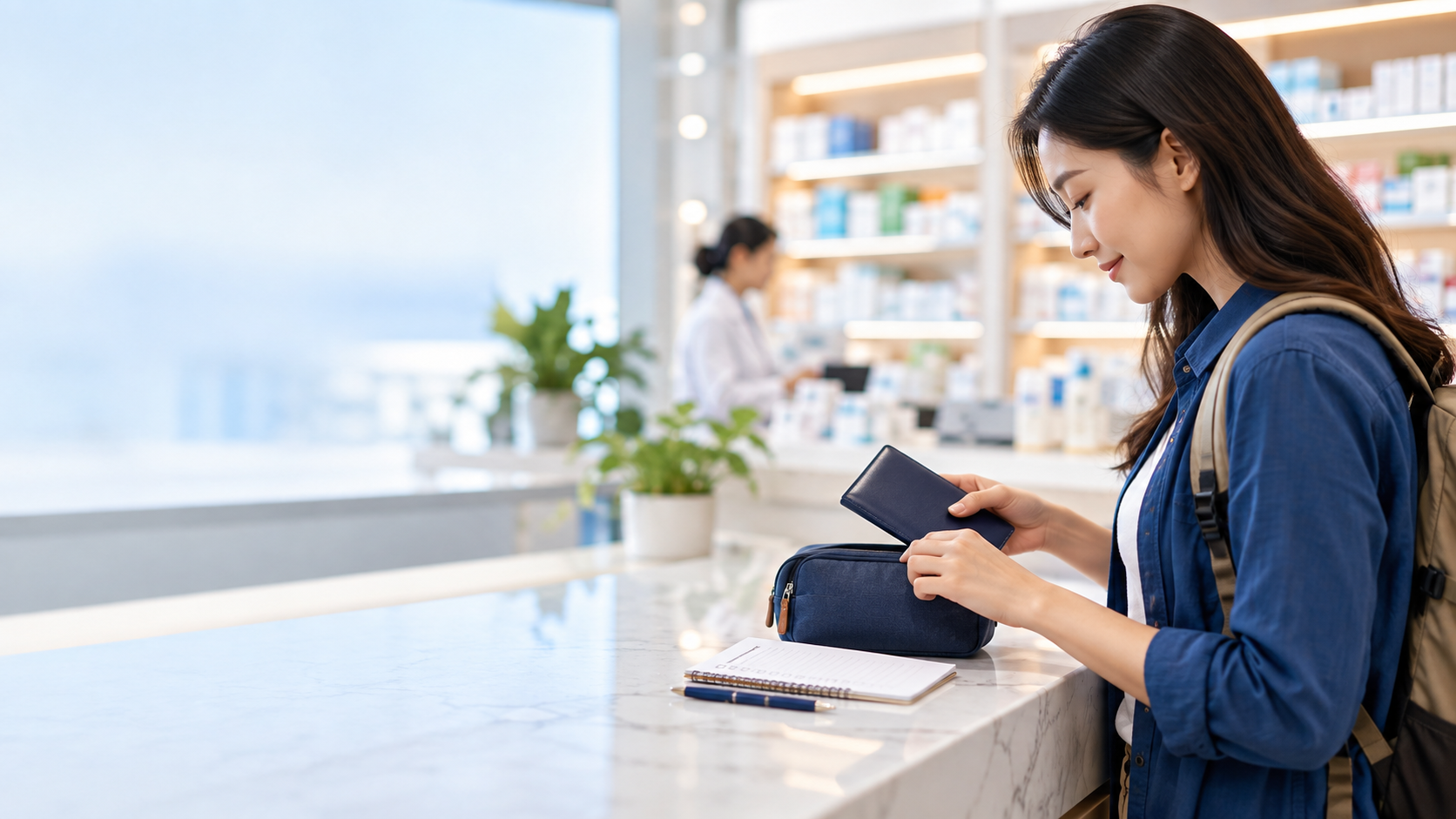
A pharmacy can solve a simple travel need, but it is not a place to guess at a diagnosis or replace urgent care. The safest approach is to travel with a clear medication record, use a qualified pharmacy, ask a licensed pharmacist about the product you are actually buying and move to a hospital or clinic when symptoms are serious, unfamiliar or getting worse.
01
Pack a medication record before departure
Bring essential personal medicines in their original packaging where possible, together with a prescription or doctor’s letter that states your name, the generic medicine name, dose and medical need. Save a copy offline and keep one copy in your hand luggage. Brand names often differ between countries; a clear generic name helps a pharmacist or doctor understand what you use without relying on a translation of the package.
Do not assume every medicine that is routine at home can be carried into China under the same conditions. Official visitor guidance recommends checking China’s drug-control rules in advance, especially for narcotic or psychotropic medicines. When a product is controlled or you need a continuing supply, obtain item-specific advice from the relevant authority and your clinician before travel.
02
Choose a qualified pharmacy
For non-urgent needs, use an established pharmacy rather than an unverified online listing or a shop selling mixed goods. Shanghai’s official guidance advises choosing a qualified pharmacy with a displayed business license and a licensed pharmacist. Look for clear premises, normal product storage and a staff member who can help you verify the product rather than simply pointing to a shelf.
Large pharmacies may have longer hours, and some operate around the clock, but availability is local. If you arrive late, ask your hotel, a hospital reception desk or a trusted local contact for a nearby licensed option; do not rely on a random map result alone.
03
Describe the medicine, not only the symptom
Show the generic name, dosage form and strength from your existing package or medication list. If you need a non-prescription product, explain the basic symptom, age of the person using it, allergies and other medicines already taken. Do not ask a pharmacist to confirm an online diagnosis, and do not combine unfamiliar products just because their packaging looks similar.
Use translation carefully. A short written note is better than an improvised conversation: “I take [generic name], [strength], [dose]” and “I am allergic to [substance]” are safer facts to share. If communication is difficult, use a translation app to display the exact written medicine name, then repeat the information back before paying.
04
Understand the prescription boundary
Official local guidance notes that many medicines, including antibiotics, require a prescription in China. A pharmacy may sell suitable over-the-counter products, but a prescription-only medicine must be prescribed through an appropriate clinician. Do not expect an overseas prescription to automatically be filled as if it were a local prescription, and do not buy a substitute solely because a familiar brand name appears on the package.
When a doctor prescribes medicine, the hospital often has its own pharmacy. This can make the product, dosage and clinical record easier to keep together. Retain the prescription, payment receipt and official invoice if you may claim costs through travel insurance.
05
Check the product before leaving
Before you leave the counter, check the generic name, strength, dosage form, quantity, production date and expiration date. Confirm that the package is sealed when appropriate and that you understand the label or pharmacist’s instructions. Keep the receipt or invoice as proof of purchase; it is useful for a return, a reimbursement claim or a conversation with another clinician.
Do not treat price or a health-product display as proof that a product is appropriate. Supplements, traditional remedies, cosmetics and medicines can sit near one another. Ask exactly what category the product is and avoid relying on advertising claims for a medical decision.
06
Use online medicine delivery cautiously
Some pharmacies and platforms offer delivery, but online availability is not a reason to skip verification. Official guidance recommends using only qualified online drug-trading services, distinguishing medicines from advertised commercial goods and checking the received product’s name, production date and expiration date. Online delivery is best reserved for a clearly understood, non-urgent need—not for new or worsening symptoms.
07
Know when to seek medical care instead
Seek urgent medical help for severe symptoms, trouble breathing, signs of a serious allergic reaction, chest pain, loss of consciousness, severe dehydration, major injury, or any rapidly worsening condition. For a significant but non-emergency problem, use a clinic or hospital rather than repeatedly trying different products. A pharmacist can assist with a product question; they do not replace an examination, diagnosis or emergency response.
08
A safe pharmacy checklist
Before travel: pack enough essential medication, original packaging and a written list. At the pharmacy: choose a qualified location, show the generic medicine name and disclose allergies. Before payment: check product details, whether a prescription is required and how to use it. After purchase: keep the receipt and seek clinical help if the condition does not improve or becomes worse.
This is travel-preparation information, not medical advice. It was reviewed on October 1, 2026 against official local-government guidance. Rules and availability vary by product and place; confirm the official requirements for your own medication before travel.
A clear medicine list and a qualified pharmacist are useful travel tools—but neither should delay needed medical care.
SRC
NEXT