TRAVEL GUIDE · CHINA
China train seats and sleepers: a visitor’s practical guide
Choose for the length of the ride, the sleep you need and the amount of personal space that makes the journey easy.
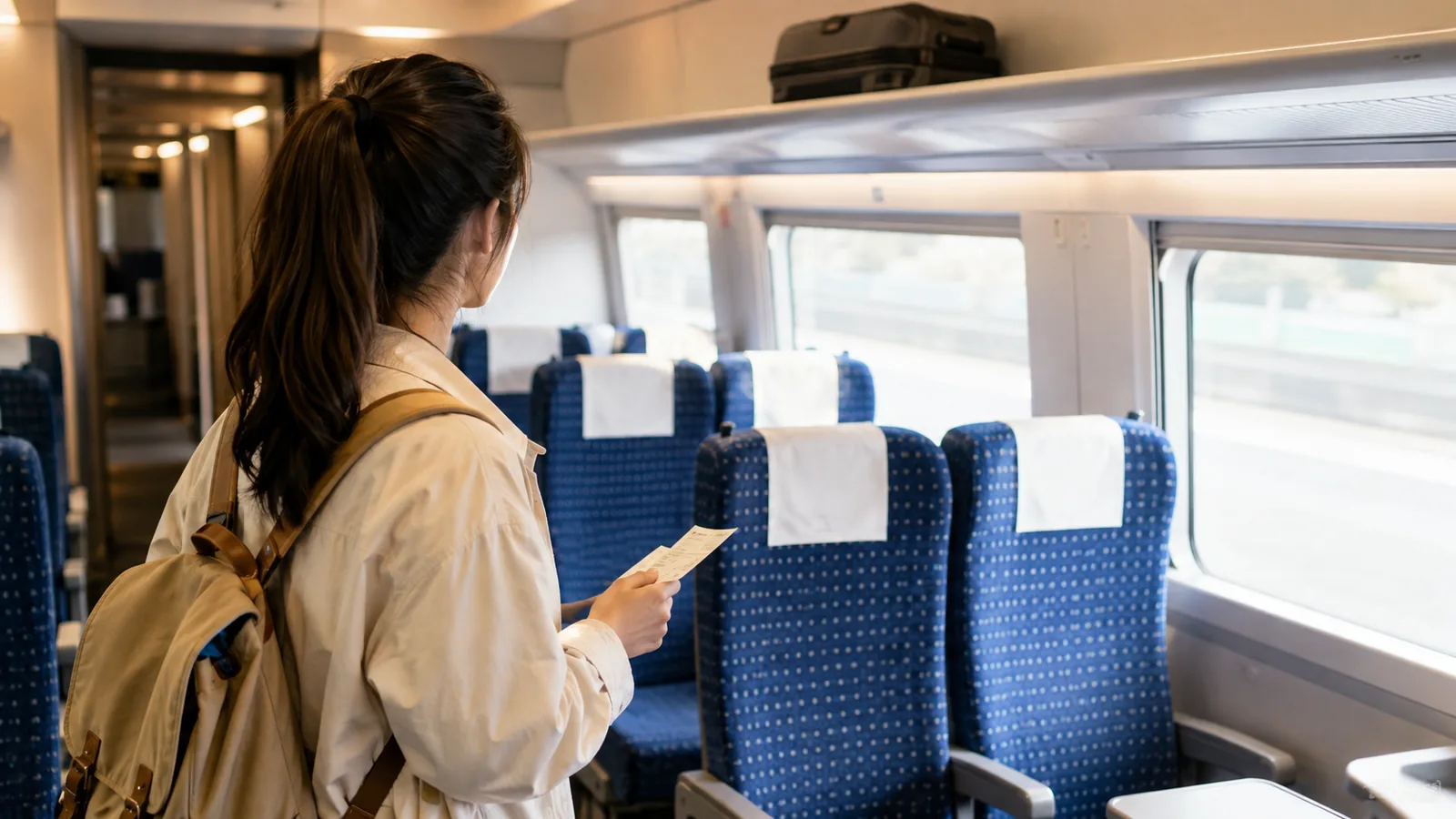
A seat label does more than describe comfort. It affects where you rest, how you manage luggage and how you arrive after a long travel day. Treat the choice as part of the itinerary, not just a ticket detail.
01
Start with the journey, not the highest class
For a daytime trip of a few hours, a standard seated carriage can be a sensible choice. For a very early departure, late arrival or a journey long enough to disrupt a night’s sleep, compare sleeper options and the arrival time. The best choice is the one that leaves you able to continue your trip safely and calmly.
02
Read the train and ticket details together
Train type, departure time, duration, carriage and seat or berth appear together in the booking information. Check the Chinese station names as well as the city name. Take screenshots of the confirmed ticket and keep them offline; a familiar English description in an app is not a substitute for the actual train details at the station.
03
Choose a seat for your practical needs
Aisle access can make frequent movement and handling a small bag easier. A window seat can feel quieter on a scenic daytime ride. If you travel with another person, confirm that the booking assigns seats together before assuming it will. Keep valuables and documents in the bag that stays with you, wherever you sit.
04
Use sleepers for rest, with a simple routine
A sleeper is a shared travel space rather than a private hotel room. Put passports, cards, medicine, electronics and your next address in a small bag near you. Wear layers, set an alarm for the arrival area and avoid relying on the carriage alone to wake you for an important stop.
05
Plan luggage around the seat or berth
Bring one small bag for items needed during the journey and place larger luggage only where it will not block aisles or doors. Before boarding, check that your bag can be lifted or rolled comfortably. When you arrive, look around the seat, luggage area and charging point before joining the exit flow.
06
Recheck the final choice before paying
Availability and fares can change with the train, date and route. Review the cancellation and change conditions on the booking channel you use, then confirm the departure station, time, passenger details and class. Keep the confirmation and a payment record until the journey is complete.
Pick the class that supports the next day: confirm the station and train, keep essentials with you and choose rest over a schedule that only looks efficient.