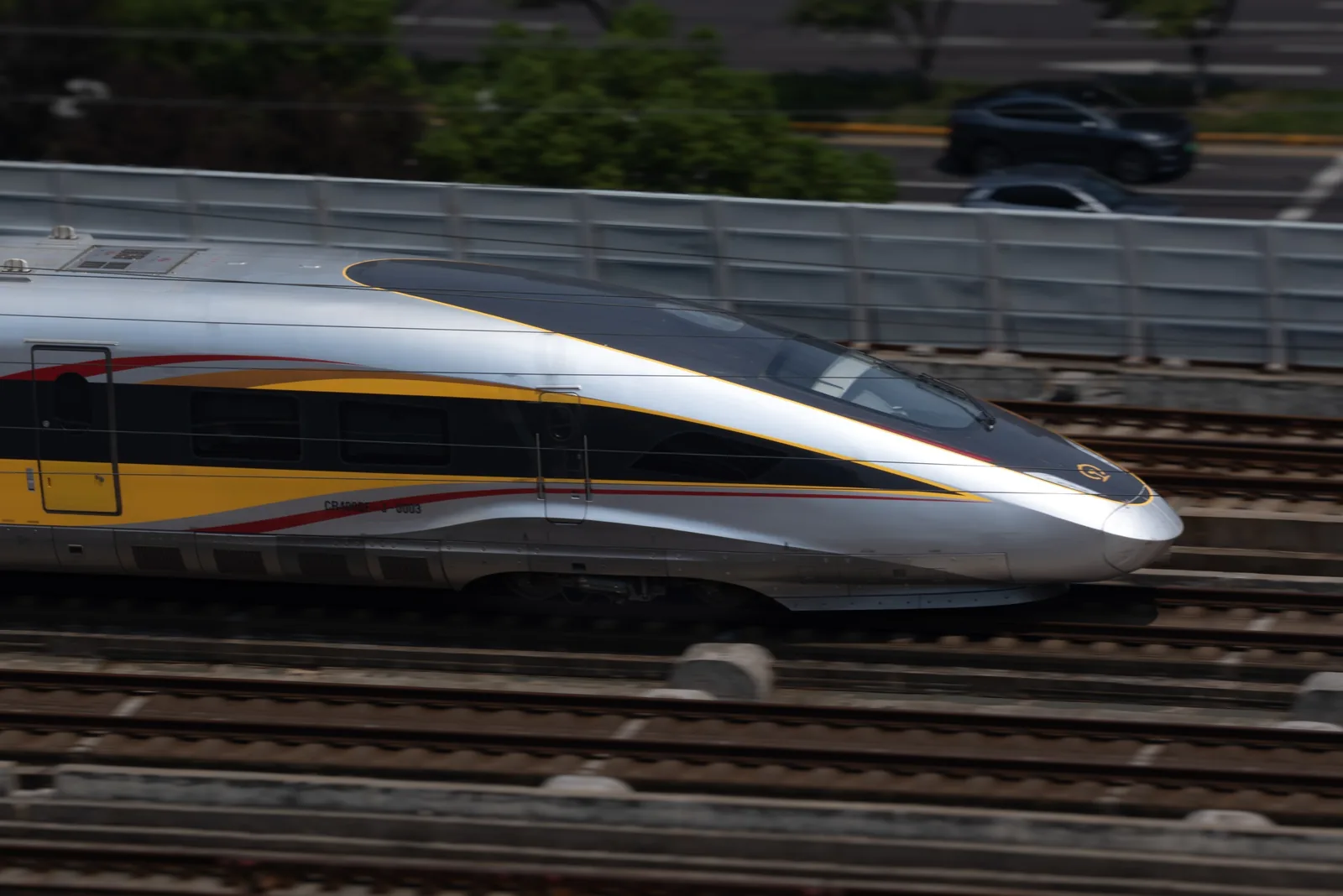
China entered the modern high-speed rail era in 2007. By the end of 2025, its network had grown to 50,400 kilometres — the largest in the world. In 2025 alone, 2,862 kilometres of new high-speed line entered service.
01
A network, not a collection of showcase lines
China's rail strategy connected city clusters, provincial capitals, manufacturing regions and inland cities. That makes each new route more useful: one line becomes part of many possible journeys, rather than an isolated connection.
02
Scale created experience
Sustained construction gave engineering teams and manufacturers opportunities to standardise designs, strengthen supply chains and improve how a complex rail system is delivered. The World Bank found that China built more than 25,000 kilometres of dedicated high-speed line in the decade covered by its study.
03
A system behind the train
Fast rolling stock is only the visible layer. Stations, signalling, power supply, maintenance depots, ticketing, bridges, tunnels and trained staff make reliable operation possible at scale.
04
Demand in dense city corridors
High-speed rail is especially useful where large cities sit a few hundred kilometres apart. For many trips, it can compete with flying once airport travel, security and waiting time are counted. China's railways carried nearly 4.59 billion passenger trips in 2025.
05
The hard questions remain
Large networks require large investment. Costs, debt, uneven demand and long-term maintenance deserve serious attention. China is not a plug-and-play model for every country, but its experience shows that technology works best when it is paired with patient planning and routes that serve everyday life.
China did not become a high-speed rail leader by purchasing fast trains alone. It built a national transport system around them.