TRAVEL GUIDE · CHINA
Cash and ATMs in China: a practical guide for international visitors
Use a small cash backup well, find a compatible ATM and avoid turning an ordinary withdrawal into a travel problem.
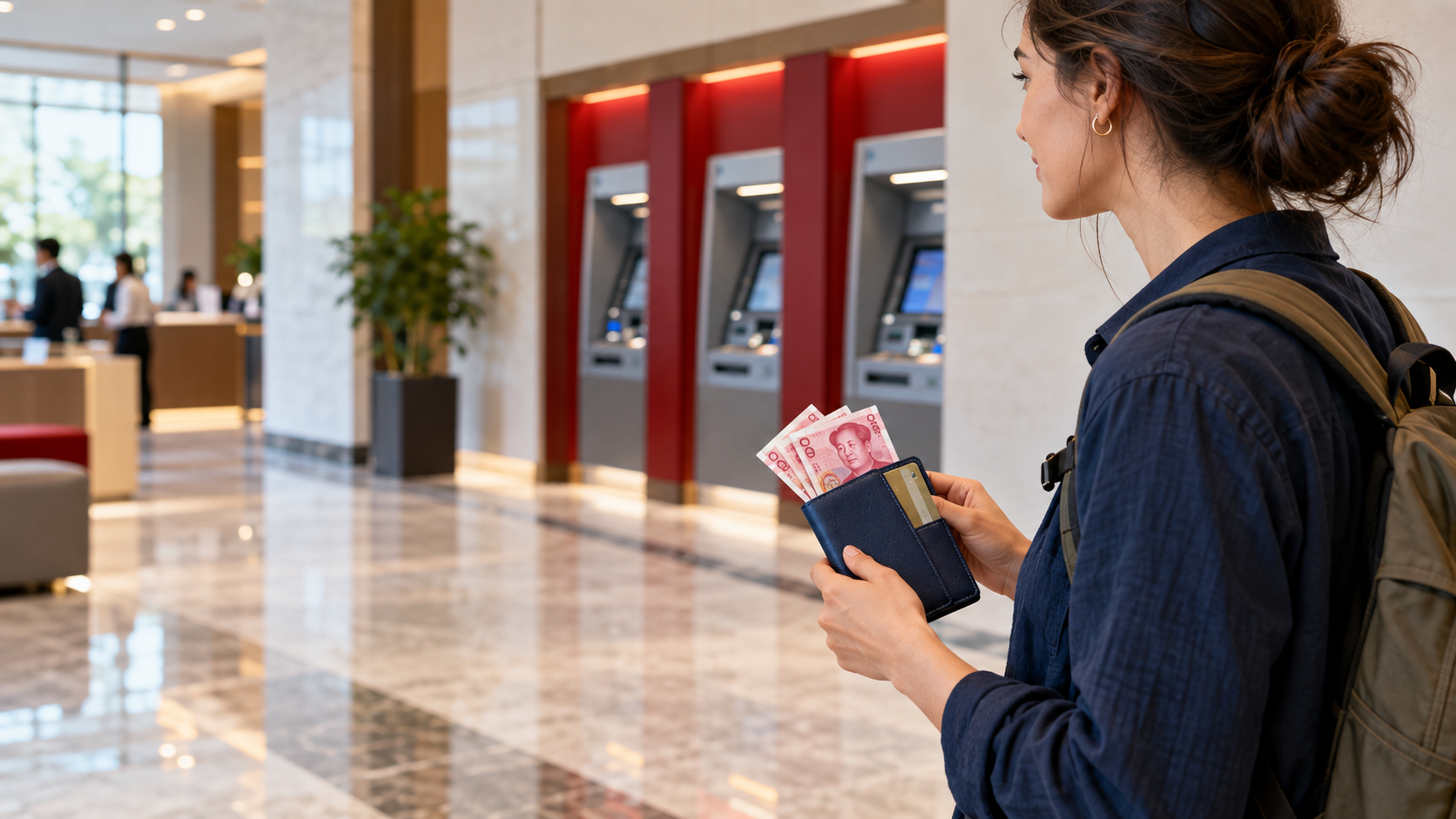
Mobile payment is common across China, but cash remains a valid payment method and an important backup when a foreign card, app verification or data connection fails. The goal is not to carry your entire travel budget in notes. It is to arrive with a practical fallback, recognize which ATM can accept your card and protect your card, PIN and receipts while you travel.
01
Treat cash as a backup, not your only plan
China’s official visitor guidance describes several payment choices: mobile payment, bank cards and RMB cash. Cash is useful for small purchases, a temporary app problem, a rural stop or a merchant whose payment option is not clear. It is less convenient for large hotel deposits, long-distance transport bookings and any situation where a digital record will matter later.
Set up at least two independent ways to pay before departure: an international card that works for you, and a mobile-payment option or enough RMB cash for a short disruption. Keep the backup separate from your everyday wallet. This gives you options without forcing you to withdraw large sums at the first airport ATM.
02
Find an ATM by acceptance marks, not by guesswork
Official guidance says overseas visitors can withdraw RMB using international bank cards at ATMs that show the relevant card-organization logo. Look at the machine itself or its screen for the acceptance mark matching your card. A bank branch is often a better place to try than an isolated machine because staff may be available if the machine retains a card or the transaction fails.
Do not assume every ATM accepts every overseas card. Compatibility depends on the card network, issuer settings and the individual machine. If one attempt fails, do not repeat the same request several times. Check the displayed acceptance mark, use another bank ATM or contact the card issuer through the number on the card.
03
Prepare your card before the trip
Confirm with your issuer that China ATM withdrawals and in-person transactions are enabled, ask about daily withdrawal limits and exchange-rate or cash-advance fees, and make sure the issuer has a way to contact you while abroad. Memorize your PIN; do not store it in the same phone case or wallet as the card.
Bring a physical card even if you expect to use an app. Some practical travel tasks still work more reliably with a card or cash fallback. If your card has a travel notice setting, complete it before leaving. A declined transaction can be a security control, not proof that the ATM or your balance is broken.
04
Withdraw deliberately and keep the evidence
Use a well-lit ATM at a bank branch, airport or established transport hub. Shield the keypad, do not accept help from strangers and cancel the transaction if the screen or card slot looks unusual. Select a modest amount, count the notes privately, then keep the receipt until the withdrawal appears correctly in your account.
Retain the original ATM slip and any exchange receipt. The State Administration of Foreign Exchange notes that unused RMB withdrawn in China with a foreign card may, within six months, be converted back at a bank counter when supported by the original withdrawal voucher and subject to the applicable rules. Even if you do not expect to convert money back, the receipt is useful for resolving a discrepancy.
05
Know the difference between cash withdrawal and currency exchange
ATM withdrawal converts your card access into RMB notes. Currency exchange converts eligible foreign cash through a commercial-bank outlet, money changer or self-service exchange facility. Official guidance identifies exchange locations at international airports, land and sea ports and other places displaying an exchange sign. Choose the option that matches what you actually have: a card, foreign notes or an app payment problem.
06
Carry small denominations and use them respectfully
After a withdrawal or exchange, ask a bank counter for smaller notes if you need them. They are more practical for inexpensive purchases and reduce the chance that a tiny merchant cannot make change. Do not expect every seller to have change for a large note, especially at the opening of the day. Cash is legal tender, but a smooth transaction still depends on the merchant having a workable amount and the time to handle it.
07
Do not use an ATM to solve every payment problem
If a mobile-payment app is not working, first check whether the issue is card binding, identity verification, network access or a merchant-specific system. A cash withdrawal may help for a meal or taxi, but it will not solve online bookings that require a verified app or card. Keep an offline address, a working data option and a second payment method so that a single failure does not control the day.
08
A five-minute money setup checklist
Before departure: confirm ATM access, fees and travel security with your issuer. On arrival: use an ATM that shows your card network or an official exchange facility; withdraw only a sensible backup amount. During the trip: split cash and cards, retain receipts, and check transactions in your banking app. If a card is retained: stay at the bank location, contact the issuer immediately and do not leave until you know the next step.
This guide was reviewed on September 30, 2026 against official government and central-bank material. Bank-network acceptance, limits and fees depend on the issuer, card and individual ATM; check your own provider before travel.
The most useful cash plan is modest: enough RMB to keep moving, plus a separate digital payment backup.
SRC
NEXT